Farewell to the great Gilson Lavis -drummer, artist and thoroughly decent chap

A smiling man sitting in an art studio, wearing a sweater over a red shirt, with a black and white portrait painting of a man with glasses and a thoughtful expression beside him.
Gilson Lavis in his home art studio in Lincolnshire. March 2013 Photo by Hattie Miles

Words: Jeremy Miles Pictures: Hattie Miles

I was so sorry to hear that my friend Gilson Lavis, longtime drummer with both Jools Holland’s Rhythm and Blues Orchestra and Squeeze died last week at his home in Lincolnshire.

He was 74 and had been battling health issues for some time. Late last year, after a career that had lasted nearly 60 years, he announced his retirement, bowing out in style with one final concert with Jools Holland’s Rhythm and Blues Orchestra at the Royal Albert Hall.

He had played in the celebrated big band for more than three decades and had previously worked with Holland in Squeeze which he joined as a founding member in 1976.

But his career extended way back to the 1960s when, having turned professional when he was only 15-years old, he toured with visiting American acts including  Chuck Berry, Jerry Lee Lewis and Dolly Parton and he took valuable experience to the young Squeeze line-up.

His impressive skills and intutive feel for music in all its forms soon gained him widespread respect from his bandmates and fellow musicians. But it wasn’t all plain sailing.

Two men standing outdoors in an urban setting, with one wearing a patterned blazer and tie, and the other in a lighter jacket and glasses.
Gilson and Jeremy Miles. Photo: Hattie Miles

Gilson had his demons and in the Squeeze days struggled with heavy drinking that eventually saw him descend into alcoholism. Much as they loved him, his wild and erractic and often wild behviour proved too much for the band and he was sacked…twice!

Eventually he managed to get sober and despite a busy touring and recording schedule, devoted the rest of his life to being an ambassador for Alcoholics Anonymous and helping others struggling with drink and addiction.

He is probably best known today for his regular TV appearances on Later and the annual New Year Hootenanny with the Jools Holland R&B Orchestra. He was also the session drummer of choice or many top musicians.

A list of those he has played with is truly extraordinary and includes Eric Clapton, BB King, Ray Charles,Paul McCartney, Adele, Amy Winehouse, Ronnie Spector, Paul Weller, Elvis Costello, Dionne Warwck, Doctor John, Marc Almond, Graham Parker and many more.The list goes on

He could adapt seamlessly to any genre of music playing rock, pop, soul, jazz, folk reggae, R&B or anything else that was required with equal feel and precision.

Beyond music he was also a talented painter, creating striking monochrome portraits of many of the musicians he worked with or particularly admired. Initially he just made sketches with a biro back stage but as his skill developed he began to paint in what would become his signature style which is how I met him when he approached me to help promote his art.

Having been a longtime admirer of his drumming, I was delighted. My wife, photographer Hattie Miles and I met Gilson at his home, a converted farmhouse in the Lincolnshire countryside. After a photo session in his home painting studio we chatted over lunch and I wrote a series of interview and feature articles and even found him a gallery that was keen to exhibit his paintings.

The show at The Hatch Gallery in Christchurch was one of the first that he staged and helped turn what had been a small side-hustle into a significant professioinal practice .

A group of three people, including a man in a suit with a striped tie, pose together in front of framed black and white portraits in an art gallery.
Hatch Gallery boss Jo Dyton (left) with Gilson and his wife Nicky. Photo: Hattie Miles

Gilson was a lovely man, kind, considerate and excellent company with endless fascinating and often hilarious anecdotes about the rock and pop stars he had worked with. We got on well and our business arrangement soon became a friendship.

I will always have happy memories of spending time with him at art shows, backstage at concerts, in his painting studio and having lunch with him and his wife Nicky. We are going to miss him so much.

*****

And here’s a piece I wrote about how Gilson’s successful battle with alcohol addiction and drug abuse eventually led to him acquiring a new set of teeth and establishing a second career as painter. It was published in 2013.

A man with glasses painting a monochrome portrait on a canvas, focusing intently with a paintbrush in hand.
Gilson Lavis in the art studio at his home in Lincolnshire in 2013. Photo: Hattie Miles

There was a great turnout for the opening night of the  new  exhibition of paintings by my good  friend, drummer-turned-portrait-artist Gilson Lavis, at the weekend. Self-taught painter Gilson specialises in black and white acrylic studies of many of the famous musicians he plays with in the Jools Holland Rhythm and Blues Orchestra. Painted backstage, in hotel rooms and at his home studio, the works on show feature some great performers  – Eric Clapton, Elvis Costello, B.B. King, Ray Charles, Dionne Warwick, Paul Weller, Doctor John, The Rolling Stones, the list goes on.

Many of the musicians he paints have become his friends. Others have exerted a profound influence on a career that dates back  more than 40 years to his days before he finding fame with Squeeze when he played for everyone from Chuck Berry to variety artists like Tommy Cooper, Bruce Forsythe and Bob Monkhouse.  The exhibition is called Portraits: Gilson Lavis in Black & White and is at the Hatch Gallery in Christchurch, Dorset, until Friday October 4. Find out more and find out why Gilson chose to stage the show in a  small town Dorset venue in my piece below which was originally published in Dorset magazine 12 years ago.

Elvis Costello portrait by Gilson Lavis

He’s one of the best and most versatile drummers in the world. Whether it’s rock, blues, R&B, soul, jazz or big band boogie, Gilson Lavis plays like a dream. Yet, at the age of 62, Gilson has decided that it might be an idea to add another string to his bow. Something to fall back on in his old age when the constant touring and punishing  effects of his nightly virtuoso drum solos become too much.

For the past few years he’s been quietly developing a second career as a portrait painter. His black and white acrylic studies focus on the musicians he has worked with or been inspired by. Many of the paintings have been snapped-up by their subjects. Others are on sale though his own personal website. Now Gilson is planning to officially launch his career as an artist with a late summer exhibition in Dorset. The show which opens at Hatch Gallery in Christchurch on September 6 and runs until October 4 will hopefully be the first of a series of shows around the country.

A monochrome portrait of a man resting his chin on his hand, wearing glasses and a ring, with a thoughtful expression.
Eric Clapton portrait by Gilson Lavis

Christchurch – home to what is officially the oldest population in England and Wales. Town motto: ‘Where time is pleasant’ – might seem a strange choice of location for a musician who has graduated with honours from the wild-man school of rock. After all his hard-boozing, dope-fuelled antics back in the days when he was with Squeeze got him sacked not once but twice. Gilson, however has been sober for years and is happy to embrace the quiet life these days. He admits that he’s constantly on the road and doesn’t often get a chance to stop and take stock of the English countryside. Dorset is different. He knows the county well not only from the annual gigs he plays with Jools at the Bournemouth International Centre but also because his wife Nicky was born and brought up in Swanage and went to school at the old Boscombe Convent.

The pair met when Nicky was working as Jools Holland’s PA – their romance sparked by “flirting over the typewriter” she says.  For the past 20 years home has been a beautiful old Lincolnshire farmhouse lovingly renovated by Gilson as part of his ongoing commitment to sobriety. But family holidays with Nicky have often  been spent in Dorset watching their son (also Gilson and now a strapping 17-year-old) playing on Swanage beach.  There are also the happy memories of performing summer concerts in the Larmer Tree Gardens. “I love Dorset, it’s a beautiful part of the world so it seems appropriate to launch my exhibition at Hatch Gallery. It’s absolutely perfect, a small independent gallery in a part of the country I love. What could be better?”

A black and white acrylic painting of a musician wearing a wide-brimmed hat and playing a guitar.
Taj Mahal portrait by Gilson Lavis

Amazingly Gilson is an entirely self-taught artist. He says he discovered that he could draw and paint purely by accident. In a curious twist of fate it was the legacy of his drink and drug addled past that provided the opportunity to discover this latent talent. “You very rarely see an alcoholic with a nice smile and I’m afraid my teeth were in a shocking state,” he explains. “Eventually about five years ago they became so painful and infected that I had to get them fixed.”  Gilson flew to  Budapest for dental treatment only to discover that the rather pleasant sounding flat that he had booked on-line was little more than a squat. There were long days to fill as his remaining teeth were extracted and he waited for implants. “It was horrible,” he recalls. “There was nothing in the place except a TV showing endless programmes in Hungarian and a radio station that played nothing but European and American pop.

“I was bored and fed up but then I found a pen and some paper and started to sketch. “I really enjoyed it and I couldn’t believe how good the results were. First I copied a picture that was on the wall – a kind of knight on horseback and then I found a photograph on my laptop of our tour manager Steve so I drew that too. It was incredible I had no idea I could draw so well.  “At school I had a bit of a reputation for drawing ladies’ breasts in my exercise book. The other kids always thought they were really good but apart from that and trying to copy pictures from a few comics I never paid much attention to art. It certainly never occurred to me that I had any real artistic talent.”

Gilson with Hatch Gallery owner Jo Dyton Photo: Hattie Miles

When he got home Nicky and his Jools Holland bandmates were equally surprised and impressed by this hitherto untapped talent. “That was it,” says Gilson. “From that moment on I was sketching the band, the crew, in fact anyone who would stand still for five minutes. I suppose that went on for a couple of years and then someone suggested I try painting. I wasn’t sure. I remember thinking that was a big step. I mean painting, that’s proper art.” Once again Gilson surprised himself, graduating first to brush-pens and then acrylics.

He soon established a signature style with vibrant monochrome portraits. His subjects are drawn mainly from the many people he has worked with.

A monochrome portrait of a woman in profile, showcasing detailed hair and facial features against a black background, signed by the artist Gilson.
Paloma Faith portrait by Gilson Lavis

The day I visited his studio the walls were hung with recent paintings of Eric Clapton, Ronnie Wood, Van Morrison, Roland Gift, Paloma Faith, Amy Winehouse, Chris Rea, Andy Fairweather Low, Paul McCartney and many more. There were stories and anecdotes to go with each one. Just one of the reasons Gilson loves painting

Surveying the works and executing a few finishing touches to Eric Clapton, he told me: “Sketching and painting make me feel really focused. It’s a meditative process. I can lose myself in a painting and just for a while this head of mine, which normally spins like a washing machine, is still. It really is a wonderful thing.” 

He gets particular pleasure from painting portraits of the musicians he has worked with. “I love painting faces. There’s a story in a face, real depths to explore. There’s youth in the smile, warmth in the eyes and experience in the wrinkles. There’s stuff going on! But for it to work I have to have known that person, however fleetingly. Give me a photograph of someone I don’t know or haven’t got a clue about and I have no interest in painting them at all.”

Retrospective celebrates the idyllic final Dorset years of sculptor Elisabeth Frink

The late sculptor Dame Elisabeth Frink in her beloved Dorset landscape

By Jeremy Miles

Dorset wasn’t just home to the late celebrated sculptor Dame Elisabeth Frink, it was a place of refuge and inspiration, providing the perfect environment for both work and play. She spent the final 16 years of her life in the county creating powerful, groundbreaking art and entertaining visiting friends at her beautiful country estate, Woolland House near Blandford Forum.

After many years living in France and London, the increasingly famous and successful Frink and her third husband Alex Csáky, discovered Woolland in the mid-1970s and instantly knew that they had found a country base in a wonderful location that offered all that they required. 

Nestling beneath Bulbarrow Hill on the edge of the Blackmore Vale and in an area of outstanding natural beauty, the house and its grounds were a haven of tranquillity surrounded by spectacular views across the ancient Dorset landscape. It provided an inspirational location for Frink’s studio that wasn’t too remote from the London art world or the foundries that cast her often giant bronze sculptures.

Photograph by Hattie Miles … Elisabeth Frink “A View From Within” exhibition at Dorset Museum, Dorchester. View of the exhibition. left, Gogglehead 1969 courtesy of The Ingram Collection of Modern Art, centre Seated Man courtesy of Yorkshire Sculpture Park, Wakefield.

Frink had trained at Chelsea School of Art in the 1950s and found early fame with her massive male figures and naturalistic sculptures of horses and dogs. She would go on to become one of the towering figures of British art driven by a sense of compassion and known for an unwavering interest in the nature of man and the laws of the natural world. She was elected as a Royal Academician in 1977 and appointed a Dame of the British Empire in 1982.

Today she is best known for her public sculptures which can be seen in a diverse array of locations nationally and internationally including Salisbury, Coventry and Liverpool cathedrals and of course much closer to home, like her Dorset Martyrs Memorial at South Walks, Dorchester, which stands on the site of the gallows where Catholic martyrs were hanged in the 16th and 17th centuries.

But there were many smaller studio works too, including both sculptures and prints and by the time she moved to Dorset there were increasing demands on her time and she needed space and a creative environment to continue developing her art.

Two of the Frink exhibits at Dorchester

Woolland soon became the focus of not only Frink’s intense and disciplined work schedule but also a joyous place for her and Alex to invite their wide circle of friends for fun weekends and long happy meals. Above all it felt like home and in a way it always had been. For although Elisabeth Frink was born in Suffolk in 1930, she had first found Dorset during the Second World War when her Army officer father was posted to the county and her family temporarily moved to the Purbeck village of Kingston. 

She was just 11 years old but memories of discovering the area and places like Kimmeridge, Dancing Ledge and Corfe Castle remained with her, helping to establish her singular artistic style.  Moving to Woolland allowed her to find the place that she felt was her true spiritual home. Her life there with Alex was intensely happy and productive but sadly cut short when they were both stricken by illness and died within weeks of each other in 2003. 

Frink was just 63 years old when she died but her artistic legacy lives on. She had long let it be known that she wanted the county to be the permanent home of her considerable archive. 

Dame Elisabeth Frink at work in the studio

Thanks to her estate many of her works are held by the Dorset County Museum in Dorchester and now, 30 years after her death, it is staging the first-ever exhibition dedicated to her time living and working at Woolland.

Elisabeth Frink: A View from Within runs until April and showcases more than 80 of her sculptures, drawings and prints including working plasters that informed her final bronze sculptures that have never been on public display before.

The show examines her working processes, recreating part of her Dorset studio with a collection of her tools and the plasters that formed the basis of some of her best-known bronze sculptures. It displays many quintessential Frink works like Seated Man, Goggle Heads, Walking Madonna, The Dorset Martyrs and there’s even her wonderful maquette for Risen Christ, the piece that turned out to be her final commission. 

The inclusion of the work in the show underlines the fact that despite suffering from the cancer that would kill her, this determined and brilliant woman worked right up until the end of the end of her life. The completed work which today towers over the western doors of Liverpool Cathedral was unveiled just days before her death.

As well as revealing something of both Frink’s artistic practices and her joy of life, this is a fascinating exhibition that gives visitors the chance to explore the importance of her years in Dorset through both her art and a selection of personal possessions, including letters and photographs. 

Dame Elisabeth Frink with her third husband Alex Csaky c1976. Frink archive Courtesy of Dorset History Centre.

Although relatively compact, this is an important show that has been beautifully designed by its co-curators Annette Ratuszniak and Lucy Johnston. With carefully selected lighting that particularly highlights the unique carving of Frink’s bronzes, it has a thematic layout that takes the visitor through sections dedicated to Family and Social Life, Printmaking, Spirituality and Humanism, Interdependence of Species, Human Rights and New Beginnings.

One intriguing addition to the exhibition is Small Warrior – the 12-inch tall bronze sculpture bought for £90 at a car-boot sale in Essex. The piece was recently the subject of BBC1’s Fake or Fortune? Was it the real deal or just a relatively worthless hunk of metal? For a while the jury was out but after exhaustive scientific tests and expert analysis it was declared to be a genuine rediscovery of a lost Frink original from the 1950s which could be worth £60,000.

*Elisabeth Frink: A View From Within runs at the Dorset Museum and Art Gallery in High West Street, Dorchester DT1 1XA until 21st April 2024. Further information at http://www.dorsetmuseum.org

*This piece was originally published in the January 2024 edition of Dorset magazine.

Buy my lamps you won’t need drugs – a compelling and effective marketing slogan

1. Edward Craven Walker and his Astro Lava Lamp.jpg
Craven Walker: daredevil, pioneering naturist and inventor of the lava lamp

I am intrigued to see that Mathmos, the Poole based company that, back in 1963, launched that soon to become indispensable hippy accessory the lava lamp are celebrating the centenary of their founder Craven Walker.

Craven – his full name was Edward Craven Walker – was in some ways an unlikely inventor of the lamp that fascinated the counter-culture.

A former RAF pilot with a passion for fast cars, speed boats and helicopters, he was also a pioneering nudist who made a number naturist films that avoided the censor by being shot underwater. Continue reading “Buy my lamps you won’t need drugs – a compelling and effective marketing slogan”

Bringing it all back home: Ann Sidney half a century after winning Miss World

Miss World 1964, Ann Sidney, photographed at the Haven Hotel, Sandbanks, Poole ... 21.11.2014 ... photograph by Hattie Miles
Miss World 1964: Ann Sidney photographed in November 2014 at Sandbanks in Poole by Hattie Miles exactly 50 years after she won the title that changed her life.

Ann Sidney swings her 4×4 into the car park at the Haven Hotel in Poole and leaps out shouting: “I’m so sorry I’m late!” Crikey! We’ve been here all of three minutes and she’s missed our agreed 2pm rendezvous by maybe 45 seconds. Not only does Ann look astonishing for a woman who turned 70 several months ago but half-a-century after she walked off with the Miss World crown she is as vital and energised as ever.

Enthusing about being back in Poole – the town in which she grew up – she apologises for wearing a hoodie, t-shirt and sports trousers . “Travelling clothes!” she explains. Never mind, she looks absolutely great but she also wants to be photographed in the flash dress she’s carrying on a hanger. Old habits die hard.

Continue reading “Bringing it all back home: Ann Sidney half a century after winning Miss World”

Mollie Moran cooking lunch for two dozen and writing a best seller at the age of 96

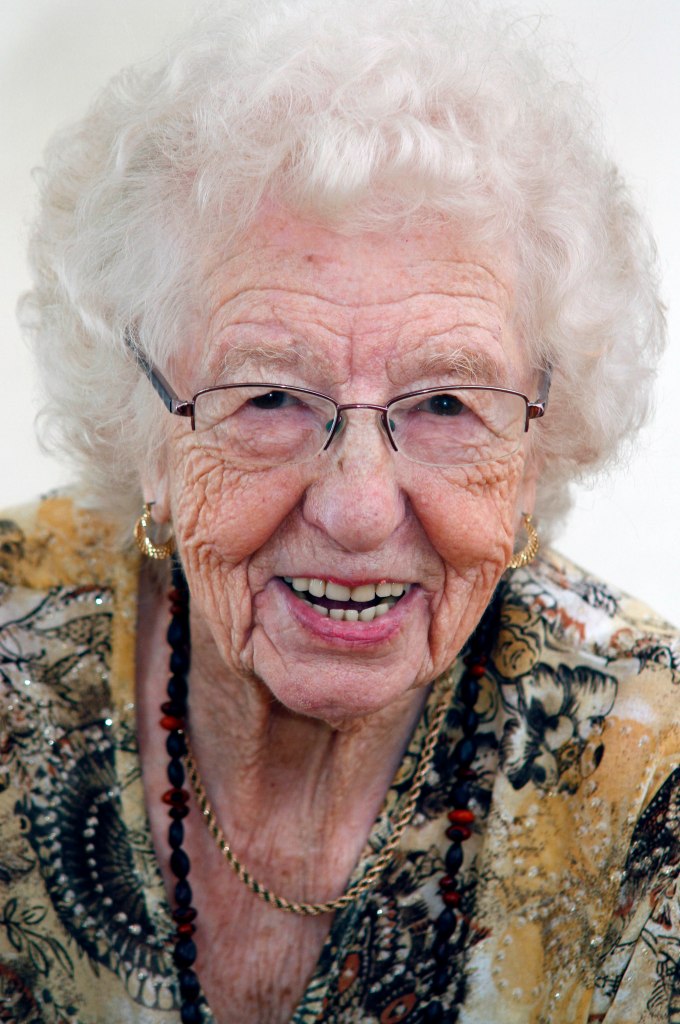
Mollie Moran photographed at her Dorset home by Hattie Miles
Mollie Moran photographed at her Dorset home in 2013 by Hattie Miles

It was Mollie Moran’s funeral today. She died just two-and-a-half years short of her 100th birthday. A good innings by anyone’s reckoning but somehow for this former kitchen maid who found literary fame in her nineties it just didn’t seem right. At least she died peacefully in her own bed just a few months after a cancer diagnosis.

I first met Mollie a year ago when I interviewed her about her best-selling upstairs downstairs memoir Aprons and Silver Spoons. Razor sharp and impossibly energetic, she seemed strong and well.  She walked her dog daily, entertained visitors at her Dorset cliff top home, hosted weekly scrabble sessions and each month would invite 25 players from across the southern region to take part in a mini-tournament. Single handedly she would cook for them all, producing a selection that included cottage pie, chicken curry and a variety of puddings. I asked how she managed it. She shrugged and told me: “Oh it’s nothing. After all I don’t do the washing up. I get someone to help with that.” She seemed indestructible. Continue reading “Mollie Moran cooking lunch for two dozen and writing a best seller at the age of 96”

I’m Scott, fly me. The life and musings of a would-be Time Lord

Who3
One of Scott’s paintings which imagines himself and wife Ana travelling in the Tardis

Words: Jeremy Miles     Pictures: Hattie Miles

Scott Fellowes is showing me his favourite sonic screwdriver. He takes aim and fires at his desk. There’s a burst of flashing lights and buzzing sounds and I’ll swear that, just for a moment, this 41-year-old Dorset college administrator and sometime artist actually turns into Doctor Who.  OK, a moment ago he was wearing a kind of frock coat, long striped scarf and a button bearing the Gallifreyan symbol of the Time Lords – the mystical Seal of Rassilon – so perhaps the illusion is understandable.

Continue reading “I’m Scott, fly me. The life and musings of a would-be Time Lord”